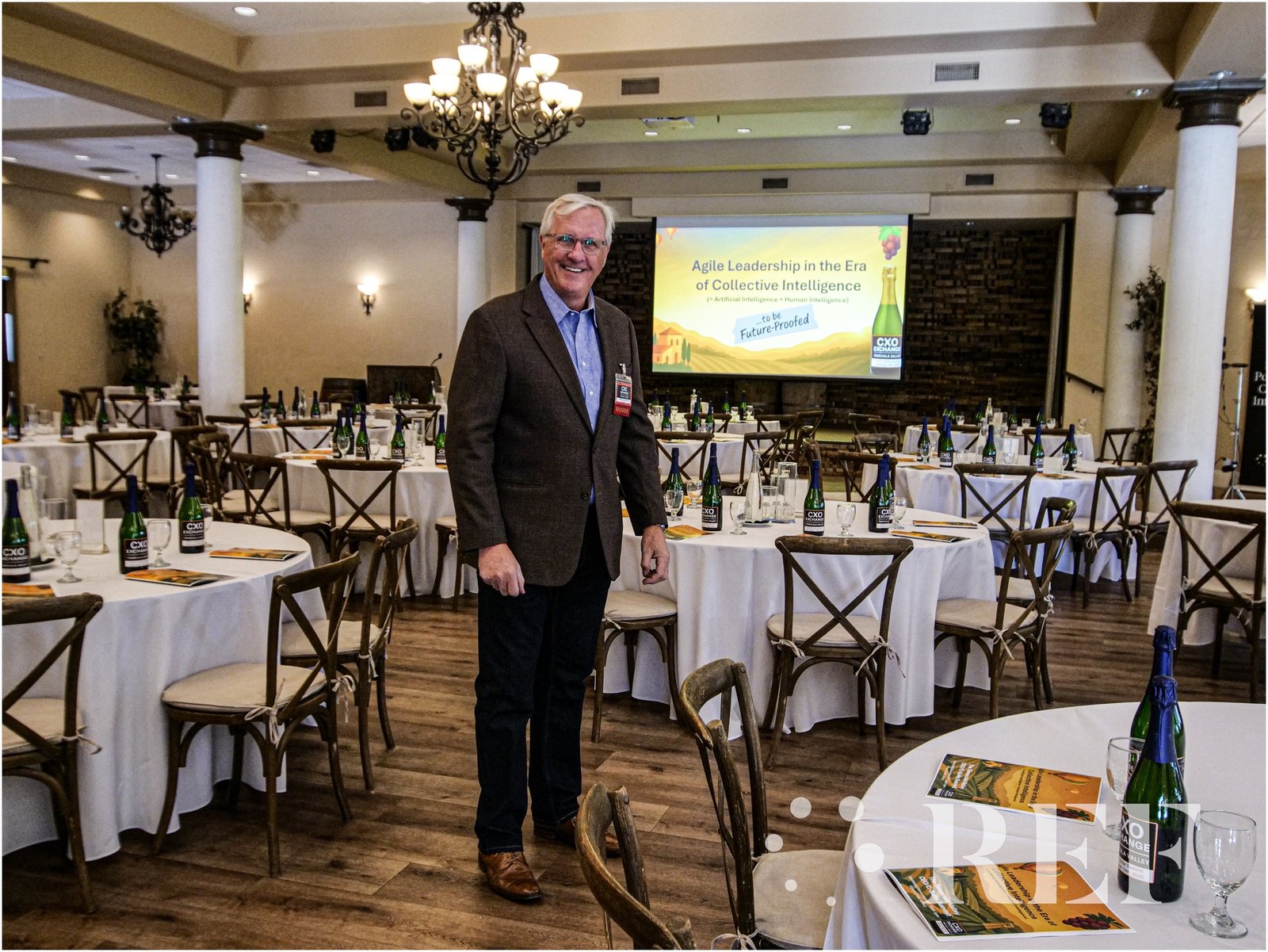
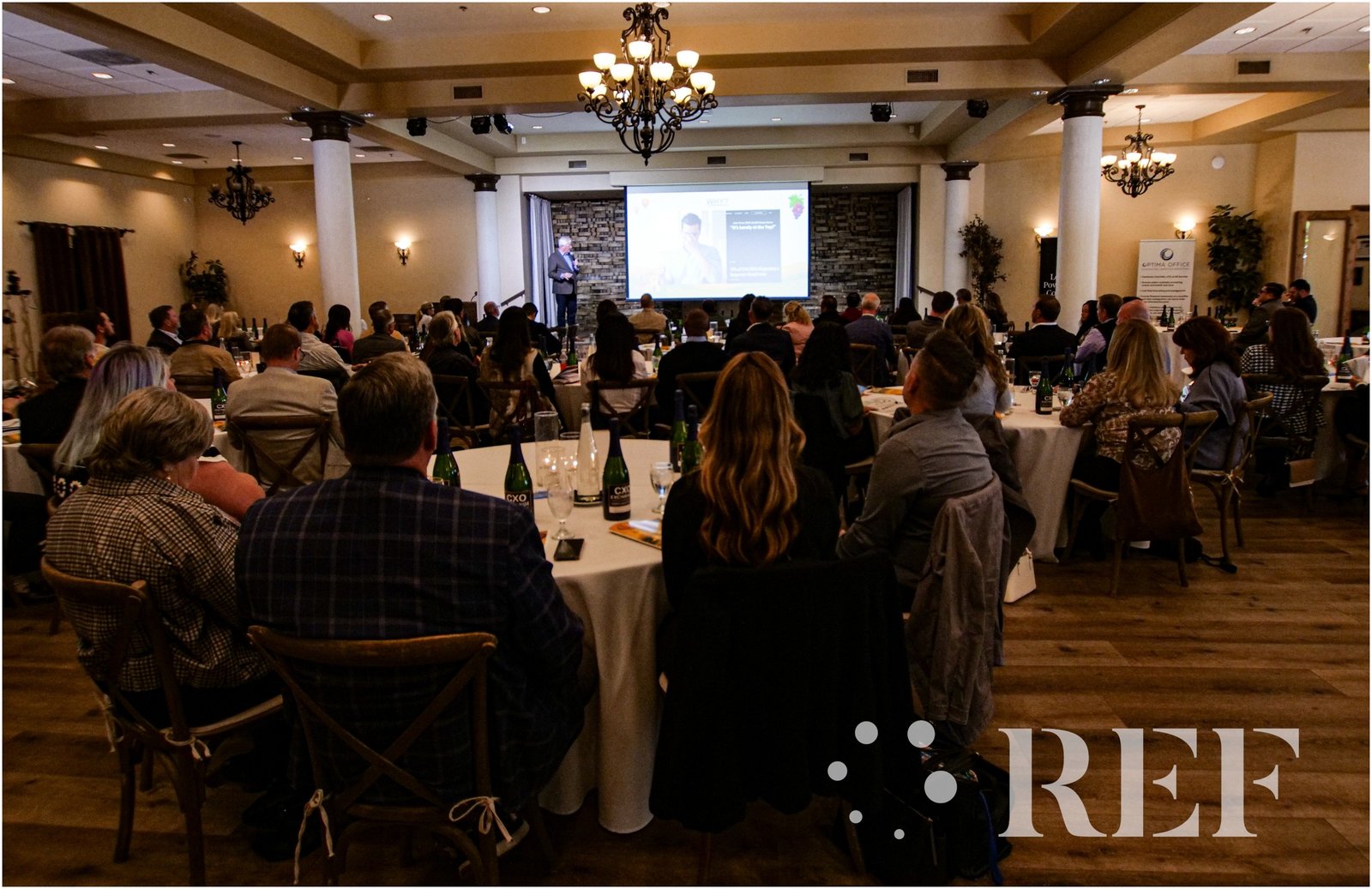
In November 2025, one hundred CEOs, C-Suite executives and senior leaders of Temecula Valley's "Big Small" companies gathered at Wilson Creek Winery for the inaugural CEO/C-Suite Summit. It was a lot of things — a first outing, a proof point, a room full of people meeting other people they should have met years ago. But the number that stuck with me afterward wasn't 100. It was the size of the gap those 100 leaders represented, and the size of the gap still outside the room.
Because here's the thing about Big Small companies in a place like Temecula Valley: they are the working core of the valley's economy. Not the household names. Not the corporate outposts. The mid-market operators. The 30-person and 300-person companies employing local people, buying from local suppliers, sponsoring local causes, holding local futures.
And they are, almost without exception, peer-isolated. The CEO of a 60-person Big Small company in Temecula does not have a natural peer group locally. They can drive an hour and a half to San Diego, Orange County or LA to find one. Most don't. Most just carry it.
The math of the room.
Here is what we are actually working with. When I say "Temecula Valley" I mean the working corridor from Fallbrook to Corona — Temecula, Murrieta, Menifee, Wildomar, Lake Elsinore, Winchester, French Valley, De Luz and the surrounding communities of Southwest Riverside County and North San Diego County. Our best estimate is that there are on the order of 2,000 Big Small companies in that footprint — mid-market operators with somewhere between 10 and 500 employees. Behind each one sits an average of about 2.5 senior leaders: a CEO or President, plus one or two C-Suite or senior functional leaders with real scope. That is roughly 5,000 senior leaders in this valley carrying meaningful weight — running teams, calling capital, holding culture, deciding what next year looks like for the people around them.
100 leaders in the room in 2025 was about 2% of that leadership class.
200 in 2026 will be about 4%.
The number we are quietly building toward — through the annual Summit, the monthly forums, HRX and NPX, and the community that surrounds all of them — is 1,000+ senior leaders participating over the coming years. That is 20% of the valley's Big Small leadership class. It is the threshold at which an eco-system stops being an event calendar and starts becoming the ambient way leaders in this valley learn, decide, and improve.
Why 200, not 120.
When we set the target for 2026, the easy move would have been to grow modestly — 120, maybe 150. Show progress. Don't overreach. But that framing misses what the Summit is actually for.
The Summit is not the product. The Summit is the moment when the eco-system becomes visible — to itself and to the rest of the valley. It's when a Big Small CEO looks around a room and realizes she isn't alone; when a sponsor sees not a networking event but the working core of the local economy assembled in one place; when a nonprofit executive discovers that half the potential board members she's been trying to find have been sitting in adjacent rooms for years.
You don't get that from 120 people. You get it from 200. And the difference between 100 and 200 is not linear — it's the difference between "a good event" and "the room the valley recognizes as its leadership." It is also the first genuine double on the way to a fourth double, and eventually to a room that carries a fifth of the valley's Big Small leadership at any given time.
What a leadership eco-system does to a local economy.
Big Small companies in Temecula Valley employ, in aggregate, well into six figures worth of local jobs. They buy from local suppliers. They sponsor local causes. They train the next generation of the workforce. They hold, disproportionately, the resilience of the local economy — because unlike a corporate outpost, when a Big Small company makes a hiring call, a capital call, or a strategy call, that decision stays here. The compounding effect is local by definition.
Now consider what happens when you meaningfully sharpen the judgment of the people making those calls — not one leader at a time, but as a class. A hundred sharpened leaders is a hundred better-run companies. Two hundred is enough to be a visible pattern in a valley this size. A thousand is a shift you can actually see — in employment stability, in local capital retention, in the pace and quality of the businesses moving from Big Small to Big, and in the shape of the valley itself a decade from now.
That is the economic argument. It is why the Hosting Coalition keeps growing rather than tightening — the Chamber of Southwest Riverside County, the Temecula Valley Chamber of Commerce, SoCal Wine Country EDC, Valley Business Journal, Temecula Valley Winegrowers Association, Wilson Creek Winery, REF Peer Forums. Every one of them is making the same bet: sharpen the leaders, and the valley moves. It is also why sponsorship of this community isn't framed as brand exposure but as investment in the local economic engine.
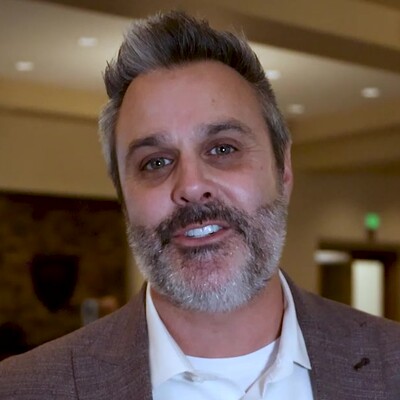 “The kind of mind-share, the kind of brilliance we have in this community — Temecula Valley, my valley — to be able to learn from everybody else and to contribute back as well. It's pretty phenomenal.”— Bryce Myers, Operating Principal, BMW Management, Inc. · at the 2025 Summit
It is why we have added HRX and NPX for 2026 — because the HR executives and the nonprofit leaders in this valley are running exactly the same peer-isolation problem, in adjacent seats. Get all three exchanges to critical mass and the compounding is not additive; it is multiplicative — because a Big Small CEO with a sharpened HR partner and a stronger local nonprofit board around her is a leader operating in a different eco-system altogether.
None of this is guaranteed. 200 is a target, not a plan. 1,000+ is a horizon, not a promise. But if you are a CEO, a C-Suite executive, a senior leader of a Big Small company in Temecula Valley — or you sponsor, support, advise or otherwise care about the eco-system these leaders operate in — this is the year to step into the room.
100 is where we started. 200 is what we are building toward this November. 1,000+ is the horizon that makes all of it worth doing.
The 2026 CEO/C-Suite Summit is Tuesday, November 17, 2026, at Wilson Creek Winery. See the speaker and full agenda →