Every Big Small CEO I have ever worked with — and after two decades of doing this work with CEOs and senior leadership teams globally, that is a large number of people — has had some version of the same experience. You cross out of the bootstrapping phase, into a company that finally has real revenue, real people, and real customers you cannot afford to lose. And the day you look up and realize you have made it, you also realize: none of the playbooks are for you.
The frameworks in the business books are usually written for companies twice or half your size. The consultants who show up want retainers you cannot justify. The corporate CEOs you meet at conferences are solving problems in a different universe. And the "just work harder, just hire faster, just be scrappy" advice you got in year two has stopped mapping to your reality.
You are in the messy middle. And the messy middle is its own leadership challenge.
Not a bigger small business. Not a smaller big business.
The trap most Big Small CEOs fall into is treating their company as a scaled-up version of what worked at 15 people, or a scaled-down version of what a Fortune 500 does. Neither works.
Hiring in a Big Small company is not "hiring more people, faster." It is: you cannot afford the wrong hire — a bad senior hire in a 60-person company is a percentage-of-payroll disaster — and you also cannot afford a full-blown recruiting machine with talent-acquisition teams. So you are running a hiring process that has to be enterprise-quality on startup resources. That is a distinct problem. It does not have a stock answer.
Same with culture. In a 15-person company, culture is a conversation. In a 5,000-person company, culture is a system with owners and metrics. In a Big Small company, culture is personal enough that one senior departure can shift it, and formal enough that "we all just get along" is no longer a strategy. Also a distinct problem.
Same with strategy, capital, systems, succession, technology, compliance, comp. Everywhere you look in a Big Small company, there is a version of "big enough to matter, small enough that you're solving it in real time by yourself." That is what "messy middle" actually means. It is not disorganization. It is the honest reality of a size that no one else has designed for.
Why frameworks matter — and why they can't do the last mile alone.
Let me be clear on this. Frameworks are essential in the messy middle. A Big Small company cannot run on gut and improvisation forever — you need operating rhythms, decision structures, cadences; an actual system for how you plan, decide, execute and adjust. A good framework threads the needle: structured enough to hold real complexity, light enough not to crush a growing company under its own weight. Helping Big Small leaders find, shape and apply frameworks that do exactly that has been much of what I have spent my career on.
But no framework, mine or anyone else's, does the last mile of contextualization for you. Every framework was built inside a particular context — at a particular size, for a particular class of problem. Apply an enterprise operating model to a 90-person company and you crush it under process weight. Apply a startup playbook to the same company and you miss that you now have to answer for real financial commitments, real people, and real regulatory exposure. The question is never whether to use frameworks. It is which framework, adapted how, applied where, with what fidelity — and those are contextual judgment calls no framework can make for you.
That is where collective intelligence earns its keep — not to replace frameworks, but to help you choose them, adapt them, and stress-test them against how they actually play in the messy middle. Half a dozen Big Small CEOs in the same room, each running their own version, comparing notes on what has and hasn't held under pressure, is the fastest way to figure out which frameworks fit your specific context — and where to bend or drop the ones that don't.
What collective intelligence actually does.
Collective intelligence — the real thing, when a stable group of leaders sharpens each other over time, in confidence — is not networking, and it is not advice. It is something narrower and much more useful.
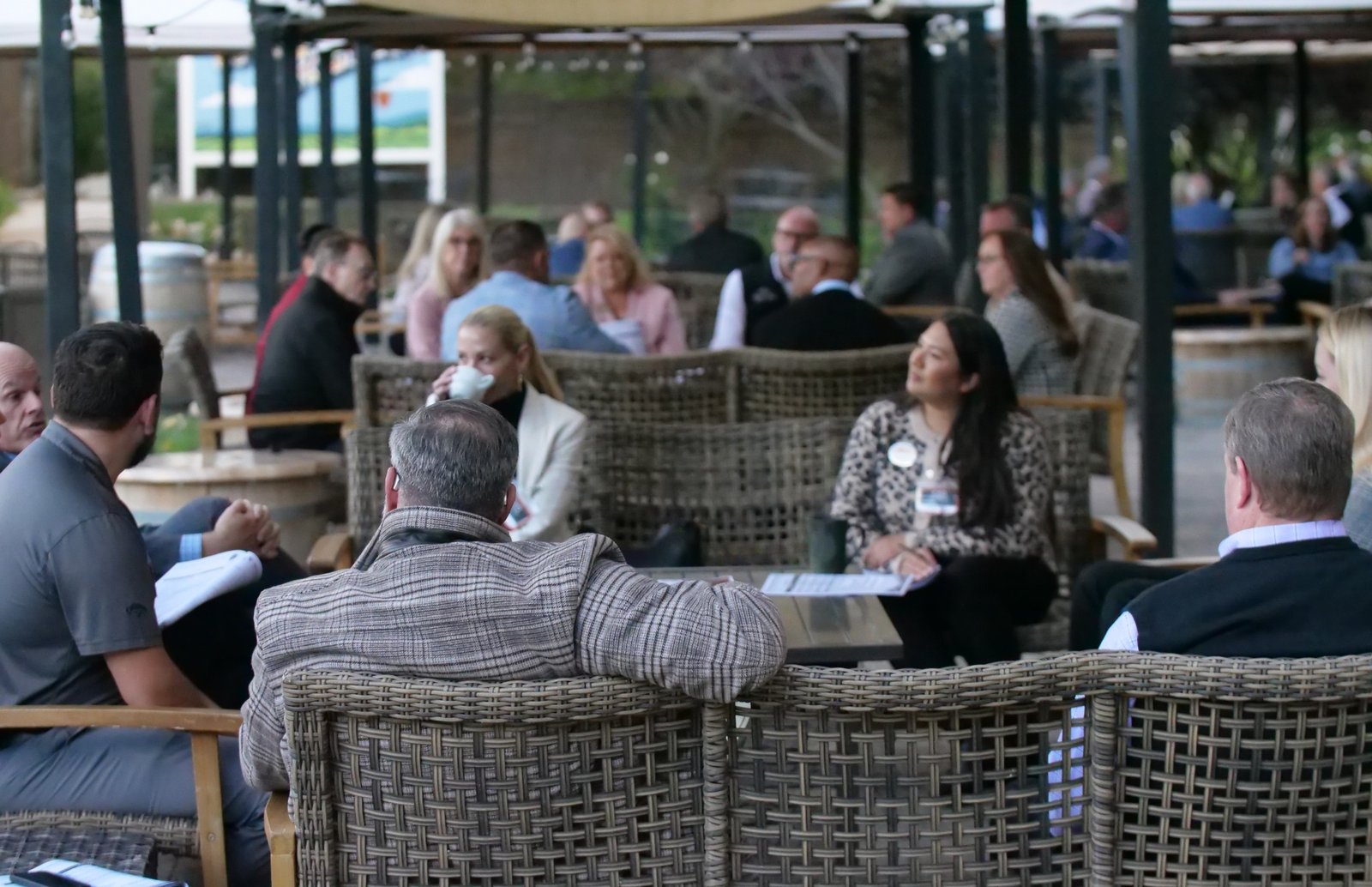
It is this: when one Big Small CEO walks the room through a decision they are wrestling with, five other CEOs in the room recognize themselves in the shape of it. Between them, they can see angles the first CEO cannot — because they are one step outside her situation, seeing it with less noise and less ego. Then the reverse happens on your issue.
Do that consistently, over time. What changes is not that you learn one new framework. What changes is that your default quality of judgment goes up — because you have imported the pattern-recognition of a dozen other operators into how you see your own situation. That is what collective intelligence means, in practice, in a room of Big Small leaders.
And it compounds. A CEO with sharper judgment makes better hires, which build better teams, which produce better decisions further down. A dozen CEOs sharpening in parallel is a whole company class getting better together. Multiply that across a valley and you start to see why we frame the CXO Exchange the way we do.
Why local peers are stronger than distant peers.
The collective-intelligence argument holds anywhere. A CEO with the same access in London or Toronto or Dubai gets sharper for the same reason.
But the local version is stronger — and this is not sentimental. Your peers in the working corridor from Fallbrook to Corona — Temecula, Murrieta, Menifee, Wildomar, Lake Elsinore, Winchester, French Valley, De Luz — know your labor market. They know your customer base. They know which local banks actually lend, which local firms are hiring your talent away, which regulatory issues have real teeth in the valley versus which are theater. A San Diego peer can give you an intelligent opinion. A Temecula Valley peer can see.
That local visibility is the reason we insist this eco-system has to be built here, not commuted to.
Where the collective intelligence of the valley shows up.
That is why the CXO Exchange exists — as the local home for the collective intelligence of Big Small leadership in this corridor. It is also why HRX extends the same pattern to HR executives, and NPX to nonprofit leaders — because peer-isolation shows up in adjacent seats and the same eco-system answers it.
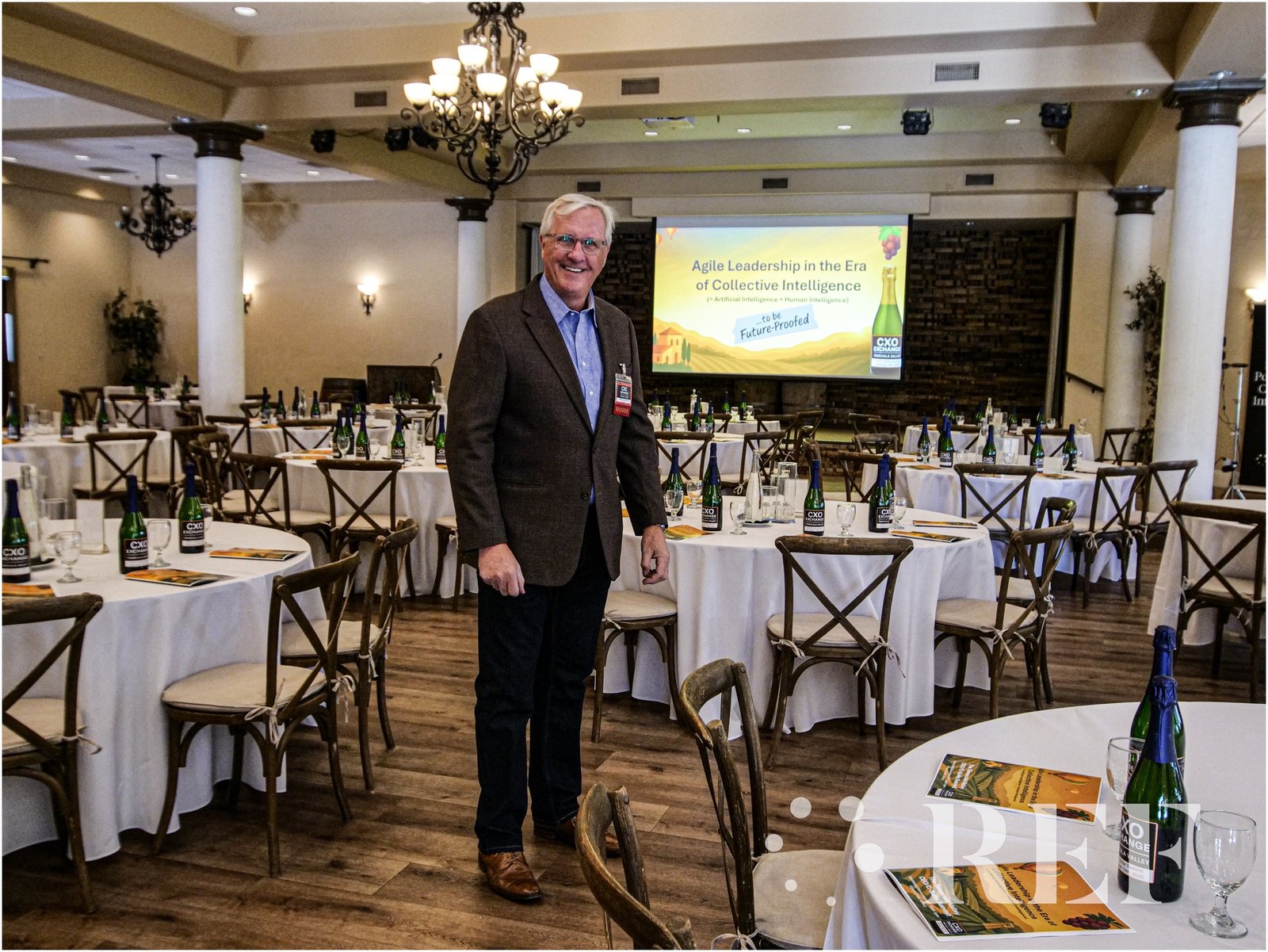
And it is why the annual CEO/C-Suite Summit matters the way it does. The Summit is the day the whole eco-system is in one room — the day the collective intelligence of the valley becomes visible to itself. Not one leader at a time. As a class.
If you are running a Big Small company in Temecula Valley — and you have felt the specific loneliness of holding decisions no one around you can quite see with you — this is the eco-system we've been building for you. Express interest →